
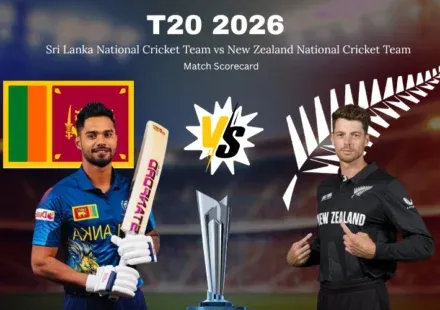
A cricket scorecard gives fans a simple way to understand important match numbers without watching every delivery. cricketmatchteam.it.com can help readers find cricket scorecards, match results, player statistics, batting performances, bowling figures, and team totals. A good scorecard brings many different numbers together, which makes it easier to review a completed match and understand how individual performances affected the final result.
Understanding Basic Match Information
The first part of a scorecard normally provides the basic information about the game being displayed. Readers can usually find the team names, competition, venue, date, match format, and final result in this section.
The result may state that a team won by runs, wickets, an innings margin, or another official margin depending on the circumstances.
A match can also finish as a tie, draw, no result, or abandonment when certain conditions prevent a normal conclusion.
Knowing the format is especially important because statistics have different meanings in T20, ODI, and Test cricket.
Once the basic details are clear, readers can move into the innings sections and start comparing individual performances.
Batting Figures Show Individual Output
The batting section usually lists every player who appeared during the innings. Common columns include runs, balls faced, fours, sixes, and strike rate.
Runs show how many runs a batter scored directly. Balls faced show how many legal deliveries the player played during the innings.
These two numbers should normally be considered together.
A batter scoring 75 runs from 45 balls has played a very different innings from someone scoring 75 runs from 120 balls.
Fours and sixes provide additional information about boundary scoring, while strike rate shows the general pace of the innings.
A high run total can be valuable in any format, but the way those runs were scored may be equally important depending on the match situation.
Dismissal Details Explain Wickets
The dismissal column tells readers how a batter was removed from the innings. Common dismissal types include caught, bowled, lbw, run out, stumped, and caught behind.
Some scorecards also identify the bowler and fielder connected with the dismissal.
When a batter is caught, the bowler normally receives credit for the wicket while the fielder receives credit for the catch.
A run out is different because the dismissal is generally considered a fielding wicket rather than a wicket credited to the bowler.
Batters who remain at the crease when the innings ends are shown as not out.
These details help readers understand exactly how the bowling attack took wickets throughout the innings.
Extras Add Important Runs
Extras are runs awarded to the batting team without being directly credited to a batter.
The main categories include wides, no-balls, byes, and leg byes.
Wides and no-balls can give the batting side additional runs while also creating another delivery under the relevant playing conditions.
Byes are recorded when the ball passes the batter without appropriate bat contact. Leg byes are recorded under specific conditions when the ball makes contact with the batter’s body.
All extras contribute to the team’s total.
In a close match, extras can become more important than they initially appear because a few additional runs can influence the final result.
Reading Bowling Figures Properly
Bowling figures provide a quick overview of how each bowler performed during an innings.
Common columns include overs, maidens, runs conceded, wickets, and economy rate.
Cricket overs can be confusing for new readers because the notation is based on legal deliveries rather than decimal fractions.
For example, 5.2 means five completed overs and two additional legal deliveries.
Runs conceded indicate the number of runs charged to the bowler, while wickets show the dismissals credited to that player.
Economy rate measures average runs conceded per over.
A low economy rate can indicate good control, although the phase of the innings and match situation should also be considered before judging a bowling performance.
Fall Of Wickets Gives Context
The fall-of-wickets section helps readers see when the batting side lost each wicket.
It generally provides the score at which each dismissal occurred and may include additional information depending on the scorecard format.
This section can reveal changes that the final team score cannot explain.
A team may lose two early wickets before developing a long partnership. Another team might begin strongly and then experience a sudden collapse.
The sequence of wickets helps identify these important periods.
Readers can compare fall-of-wickets information with partnerships to understand which players stabilized the innings and which periods caused the greatest pressure.
This is especially useful when reviewing matches after they have finished.
Partnership Numbers Show Cooperation
Partnership statistics explain how two batters contributed together while remaining at the crease.
Individual scores are useful, but partnerships often provide additional context about how an innings was built.
A batter scoring 100 runs may have received significant support from another player during a long partnership.
Lower-order partnerships can also become valuable when a team has already lost several wickets and needs to add important runs.
Large partnerships often indicate stability, while several short partnerships may suggest that bowlers maintained consistent pressure.
Looking at partnerships alongside individual batting scores creates a more complete picture of the innings.
Team Totals Need Proper Context
The team total is usually one of the first statistics fans check after the match begins or ends.
A score such as 165 for 8 means the team scored 165 runs while losing eight wickets.
The number of overs used can also be shown.
However, the value of a team total depends heavily on the format and playing conditions.
A total that looks average on a batting-friendly surface might be extremely difficult on a challenging pitch.
Venue dimensions, weather, pitch behavior, bowling quality, and opposition strength can all influence the competitiveness of a total.
Readers should therefore avoid judging an innings only by its final number.
Targets Matter During Chases
The second innings is usually easier to understand when readers know the target required.
If the first team scores 200 runs, the chasing side normally needs 201 runs to win under standard circumstances.
The scorecard may show the target along with current score, required runs, wickets remaining, and overs available.
These figures allow readers to understand how difficult the chase has become.
A team reaching the target with several wickets remaining may have controlled the game effectively.
Another team reaching the same target after losing nine wickets faced a much closer contest.
The final winning margin can therefore provide valuable context when reviewing the completed match.
Run Rate Tracks Scoring Speed
Run rate measures the pace at which a team scores relative to overs completed.
This figure becomes especially useful in limited-overs cricket because the number of available deliveries is fixed.
During a chase, the required run rate shows the scoring pace needed to reach the target within the remaining overs.
It can rise quickly after several quiet overs.
A few boundaries can then bring the required rate down and change the situation.
Fans can compare the current scoring rate with the required rate to understand whether the chasing team is moving ahead or falling behind.
Wickets remaining also matter because a high required rate becomes more difficult when only a few batters remain.
Strike Rate Adds More Meaning
Strike rate provides information about how quickly a batter scores.
It generally represents runs scored per hundred balls faced.
For example, scoring 40 runs from 20 balls creates a strike rate of 200, while scoring 40 runs from 50 balls creates a strike rate of 80.
The run total is identical, but the scoring speed is completely different.
Strike rate is especially useful in T20 cricket because teams have limited time and deliveries available.
It also matters in ODI cricket, where teams need to manage their scoring rate across a longer innings.
In Test cricket, strike rate can still provide useful information, although patience and time at the crease can sometimes be more important.
T20 Scorecards Need Quick Reading
T20 matches produce a large amount of action within a short period.
Batters have only twenty overs available, so scoring speed often becomes a major part of the strategy.
Bowlers also have limited overs and must use them carefully.
A high strike rate, strong boundary count, and useful partnership can quickly change an innings.
On the bowling side, wickets and economy rate can show which players successfully created pressure.
A large total can still be chased when the opposition maintains an aggressive scoring pace.
This is why T20 scorecards should be read by looking at several numbers together instead of focusing only on the final score.
ODI Statistics Show Different Strategies
ODI cricket provides fifty overs in a normal innings, creating more time for teams to build their score.
Batters may start carefully, establish partnerships through the middle period, and increase their scoring later.
The scorecard can show these changes through individual strike rates, partnerships, wickets, and team run rate.
Bowling figures can indicate which players restricted scoring and which bowlers were attacked successfully.
An ODI total should also be considered alongside wickets lost and overs completed.
A team that scores quickly while preserving wickets may have created a strong platform for the later overs.
The exact value of the final total still depends on the venue and match conditions.
Test Scorecards Need Deeper Reading
Test cricket produces more detailed scorecards because each side can potentially bat twice.
Readers may need to review four separate innings before understanding the complete match.
Scorecards can include declarations, follow-on situations, innings leads, and remaining wickets.
A batter might score heavily in one innings and contribute less in the next.
Bowlers can also have very different performances across separate innings because pitch conditions may change.
For this reason, Test scorecards should be read in stages rather than treated like a short limited-overs summary.
The final result makes more sense after the individual innings have been compared carefully.
Fielding Numbers Show Contributions
Some scorecards include detailed fielding information, particularly catches, stumpings, and run-outs.
These statistics can reveal contributions that are not visible in batting and bowling sections.
A player might score very few runs but take two important catches.
A wicketkeeper can influence the match through catches and stumpings while also supporting the bowlers throughout the innings.
Fielding statistics are not always displayed in identical formats across different cricket competitions.
When they are available, however, they help provide a broader picture of team performance.
Good cricket analysis should consider batting, bowling, and fielding rather than focusing on one area alone.
Comparing Different Players Fairly
Scorecards make player comparisons convenient because performances from the same match are placed together.
Fans can compare runs, balls faced, strike rates, boundaries, wickets, overs, runs conceded, and economy rates.
However, statistics should always be considered alongside player roles.
An opening batter usually receives more opportunities than a lower-order player.
A bowler operating during the final overs may concede more runs because batters are deliberately attacking.
A bowler who takes one wicket while conceding very few runs can still have a highly valuable performance.
The best comparisons therefore combine numbers with match circumstances and player responsibilities.
Why Accurate Statistics Matter
Cricket fans often notice statistical mistakes because many followers regularly track scores and player performances.
An incorrect team total or player score can reduce confidence in an entire article.
Runs, wickets, overs, extras, strike rates, economy rates, and final results should be carefully checked before publication.
Calculated statistics should also be reviewed because an incorrect source number can affect several other figures.
Reliable cricket information sources can help confirm important match details.
Accuracy should always be more important than creating an exaggerated description of a player’s performance.
When scorecards remain consistent and accurate, readers have more reason to return for future match information.
Final Thoughts For Cricket Fans
Cricket scorecards provide a practical way to understand almost every important statistical part of a match.
Batting sections show runs, balls faced, boundaries, and strike rates. Bowling sections show overs, runs conceded, wickets, maidens, and economy rates.
Extras explain additional runs, while partnerships show how two batters contributed together.
Fall-of-wickets information reveals when dismissals occurred, and team totals show the overall result of an innings.
During a chase, target, required runs, remaining overs, wickets, and run rate help readers understand the pressure on the batting side.
T20 scorecards usually emphasize quick scoring and short bowling spells, while ODI scorecards show how teams manage a longer fixed-overs innings.
Test scorecards require more detailed attention because both teams can bat twice.
Fielding figures can add further context when catches, stumpings, and run-outs are included.
For regular cricket followers, learning these sections makes scorecards much easier to understand and compare.
Accurate scorecards are also useful for checking player records, tournament performances, team trends, and important match statistics after the game has ended.
Read also :-
delhi capitals vs kolkata knight riders match scorecard
pakistan national cricket team vs india national cricket team match scorecard
kolkata knight riders vs delhi capitals match scorecard
lucknow super giants vs punjab kings match scorecard