
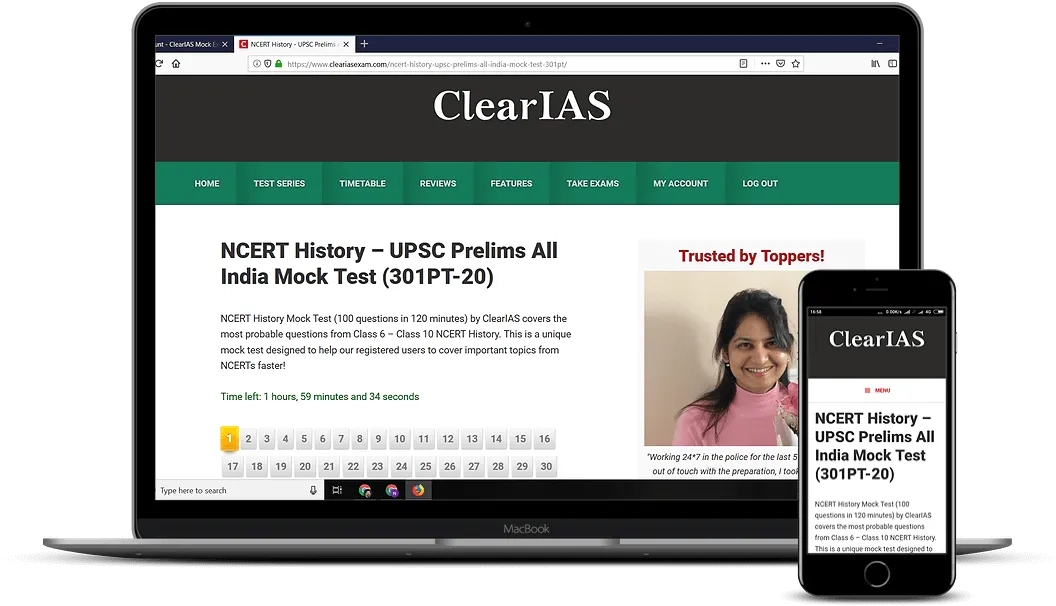
Online mock test series are one of the smartest ways to prepare for competitive exams today. You can study concepts for weeks, watch lectures, and make notes—but when the real exam starts, everything depends on speed, accuracy, and calm decision-making under pressure.
That’s exactly where mock tests help.
They don’t just test your knowledge. They train your brain to perform in exam conditions. They teach you time management. They show you your weak areas clearly. And most importantly, they build confidence with practice.
Whether you’re preparing for SSC, Banking, Railway, UPSC prelims, state government exams, teaching exams, or even entrance tests, mock tests can become your daily practice partner.
In this article, we’ll explore how online mock tests work, why they are so effective, and how to use them the right way—so you don’t just attempt tests, but actually improve with every attempt.
Table of Contents
ToggleWhy exam preparation feels incomplete without mock tests
Many students prepare seriously but still feel nervous during the exam. This happens because reading and solving questions at home is different from solving them under time pressure.
In the exam hall, your mind works differently. You feel the clock ticking. You face tricky questions. You get confused between options. And sometimes, you waste time on one question and lose marks in others.
Mock tests help you face these situations before the real exam.
They create a practice environment that feels similar to the actual test. Over time, your brain becomes comfortable with pressure. Your speed improves naturally, and your fear reduces.
That’s why serious aspirants treat mock tests like training sessions, not optional practice.
A real story: how mock tests helped one student crack a government exam
Let’s take a simple example.
A student preparing for a banking exam was good at concepts. He understood reasoning, basic maths, and English grammar. But whenever he attempted a full test, his score stayed low.
He realized the issue wasn’t knowledge. It was time management.
So he started attempting one full mock test every alternate day. After each test, he spent more time analyzing than attempting. He tracked where he wasted time, which questions he should skip, and which topics were weak.
Within one month, his score improved steadily. He became faster and more confident. In the final exam, he didn’t panic because the environment felt familiar.
This is the real power of a good Online mock test series—it turns preparation into performance.
What makes online mock tests better than offline practice
Offline practice has value, but online mock tests bring features that are difficult to match with paper tests.
Online tests provide instant results. You don’t have to wait or calculate manually. You get detailed analysis of your speed, accuracy, and section-wise performance.
Many platforms also show comparison with other students. This helps you understand where you stand.
Online mock tests are also easy to attempt anytime. You can take a test on your laptop or even on mobile.
Most importantly, online mock tests are designed to match the latest exam pattern. This keeps your preparation aligned with current trends.
Online mock test series: how it improves speed and accuracy
Speed and accuracy are the two biggest factors in competitive exams.
Mock tests improve speed by training you to solve questions quickly without overthinking. When you attempt multiple tests, you start recognizing patterns. Your brain learns shortcuts. You stop wasting time on unnecessary steps.
Accuracy improves because mock tests highlight your mistakes. You begin to notice where you are making silly errors, like wrong calculations, misreading questions, or rushing through options.
Over time, your attempt strategy becomes smarter. You learn which questions to solve first, which ones to skip, and how to maximize marks.
This is why mock tests are not just practice—they are strategy-building tools.
Understanding the real exam pattern through mock tests
Many students study topics but don’t understand how exams actually ask questions.
For example, you may know percentage formulas, but the exam may ask percentage-based word problems in a tricky format. You may know grammar rules, but the exam may test them through confusing sentence structures.
Mock tests expose you to the real style of questions.
They help you understand difficulty level, topic weightage, and question trends. You also learn how the exam mixes easy and difficult questions.
When you know the pattern, you feel more in control. And control is what reduces exam fear.
The best way to start mock tests without feeling overwhelmed
Some students delay mock tests because they feel “not ready.”
They think they should complete the syllabus first. But in reality, mock tests can start early.
In the beginning, your score may be low. That’s normal. The goal is not to score high immediately. The goal is to learn how the test works and where you stand.
Start with topic-wise tests if full tests feel too difficult. Then slowly move to sectional tests. Finally, attempt full-length mocks regularly.
This gradual approach builds confidence and reduces pressure.
Once you accept that low scores are part of learning, mock tests become enjoyable.
Online mock test series for different exams: what changes?
Mock tests are useful for almost every competitive exam, but the strategy changes depending on the exam type.
For exams like SSC and Banking, speed matters a lot. You need to attempt more questions quickly with high accuracy.
For exams like UPSC prelims, question style is different. You need strong conceptual clarity and smart elimination techniques.
For teaching exams, you may need balanced preparation across subjects and pedagogy sections.
That’s why choosing the right mock test series matters. It should match your exam’s pattern, syllabus, and difficulty level.
A good platform updates tests regularly according to the latest exam changes.
How to analyze your mock test properly
Attempting a mock test is only 40% of the work. Analysis is the remaining 60%.
After every test, check which questions you got wrong and why. Was it lack of concept? Was it a silly mistake? Was it time pressure?
Also check the questions you left. Were they actually solvable? Could you have attempted them with a better strategy?
Look at your time per question. If you spent too long on one problem, identify what slowed you down.
Mock analysis helps you improve faster than random studying. It shows you exactly what to fix.
This is why a strong Online mock test series should include detailed solutions and performance reports.
The role of revision and mock tests together
Mock tests and revision work best when combined.
If you attempt tests without revising, you may repeat the same mistakes. If you revise without tests, you may not know if you can perform under pressure.
A smart plan is to revise a topic, attempt a test on it, analyze mistakes, and revise again.
This creates a loop of improvement. Your weak areas become strong. Your strong areas become faster.
This method also saves time because you focus only on what matters most.
Instead of revising everything again and again, you revise based on your mock performance.
How many mock tests should you attempt in a week?
There is no single perfect number, but consistency matters more than quantity.
If you are in early preparation, two to three tests a week can be enough. Focus more on analysis and topic improvement.
If your exam is near, you can attempt more full-length mocks. Many serious aspirants attempt four to six tests a week in the final phase.
But don’t attempt tests like a machine. One well-analyzed test is better than three rushed tests.
Your goal is improvement, not just attempts.
A smart schedule is one mock test, one deep analysis session, and one revision session.
Common mistakes students make while using mock tests
Many students use mock tests incorrectly and then blame the platform.
One mistake is attempting tests casually without timing. If you pause the test again and again, you are not training your brain for real pressure.
Another mistake is focusing only on score. Score is important, but learning from mistakes is more important.
Some students keep attempting new tests without revising weak topics. This creates frustration because the score doesn’t improve.
Another common mistake is ignoring accuracy. Attempting too many questions with low accuracy can reduce marks due to negative marking.
A good mock strategy balances speed and accuracy with smart question selection.
Online mock test series: how it helps build exam temperament
Exam temperament means your ability to stay calm, focused, and confident during the exam.
Many students know answers but still panic. They waste time, make silly mistakes, or lose confidence after one tough section.
Mock tests train your mind to handle this pressure.
When you attempt tests regularly, you learn to move on from difficult questions. You learn to control your emotions. You learn to manage time without stress.
This mental training is a big reason toppers rely on mocks.
A strong Online mock test series prepares your mind as much as it prepares your knowledge.
Choosing the right mock test platform: what matters most
Not all mock test platforms are equal.
A good platform should offer updated tests, detailed solutions, and clear performance analysis. The questions should match the actual exam level, not too easy and not unrealistic.
The interface should feel like the real exam. Timer, navigation, and section switching should be smooth.
Also check if the platform provides previous year-based mocks. These are extremely helpful for understanding exam trends.
Support features like error reporting, language options, and mobile compatibility are also useful.
A reliable mock series feels like a real exam simulator, not just a random question set.
How to use mock tests for time management improvement
Time management is not about being fast in everything. It’s about being smart with your time.
Mock tests help you learn which questions to solve first. Many exams have easy questions that can be solved quickly, and difficult ones that can waste time.
With practice, you learn to identify easy questions faster.
You also learn how much time each section needs. Some students spend too much time in reasoning and then rush through maths. Mock tests help balance this.
Over time, you develop a personal time strategy that fits your strengths.
This strategy becomes your biggest advantage on exam day.
Using mock tests to improve accuracy in negative marking exams
Negative marking can reduce your score badly if you guess too much.
Mock tests teach you controlled attempts. You learn when to attempt and when to skip.
You also learn elimination techniques. Even if you don’t know the exact answer, you can remove wrong options and increase chances.
Accuracy improves when you slow down slightly on tricky questions and avoid careless mistakes.
Mock tests show you your accuracy percentage. If it’s low, you need to focus on fewer attempts with better correctness.
A smart aspirant always values accuracy more than blind speed.
Mock tests for beginners vs advanced aspirants
Beginners often feel demotivated when they see low scores. But that’s normal.
At beginner level, mock tests help you understand the exam format and identify weak areas. Your score will improve slowly, and that’s okay.
Advanced aspirants use mocks to fine-tune strategy. They focus on increasing attempts, improving accuracy, and reducing time per question.
So the purpose of mock tests changes with your level.
The best part is that mock tests support both. Whether you are starting today or preparing for months, mock tests can guide you.
That’s why Online mock test series are useful for every stage of preparation.
How to stay motivated when mock scores are low
Low scores can hurt confidence, but they can also guide you.
Instead of thinking “I am weak,” think “I found my weak areas early.”
Mock tests are not judgment. They are feedback.
If you are scoring low in maths, it means you need more practice there. If you are slow in reasoning, it means you need more timed practice.
The biggest mistake is quitting mock tests because of low scores.
The students who improve are the ones who continue, analyze, and revise consistently.
Every topper has faced low mock scores at some stage. They just didn’t stop.
The best daily routine to combine study and mock tests
A simple routine works best for most aspirants.
Study one topic daily, practice questions, and attempt a short test. On alternate days, attempt a full mock test.
After the mock, spend time analyzing. Fix your mistakes the next day through revision.
This cycle keeps your preparation balanced. You learn concepts, you apply them, and you test them under pressure.
When you follow this routine for a few weeks, your speed and confidence increase automatically.
This is how smart preparation happens.
Final tip: make mock tests your strongest habit
Mock tests are not just for checking your score. They are for building your exam skills.
They improve speed, accuracy, time management, and confidence. They help you understand real exam patterns and develop a winning strategy.
If you want real progress, treat mock tests like a daily habit.
And if you use them with proper analysis and revision, Online mock test series can become the biggest reason you perform better on exam day.
Read also:
e shikshakosh बिहार
e-shikshakosh portal
www.e shikshakosh
e shikshakosh form pdf